
Everything New in Forza Horizon 6
➞ I’ve spent a good amount of time analyzing the early gameplay preview of Forza Horizon 6, and honestly, this is the first time in years where a Horizon game feels like a real step forward – not just a new location with better graphics.
This time, it’s deeper. Smarter. More grounded in actual car culture.
From the moment the gameplay started, I could tell this wasn’t just another open-world racer. It feels like Playground Games is trying to redefine what Horizon actually is.
In this breakdown, I’m going to walk you through everything new in Forza Horizon 6, what actually matters, and how it changes the experience for players like me—and probably you too.
Japan Map Design: Why This Is the Most Important Change in Horizon History
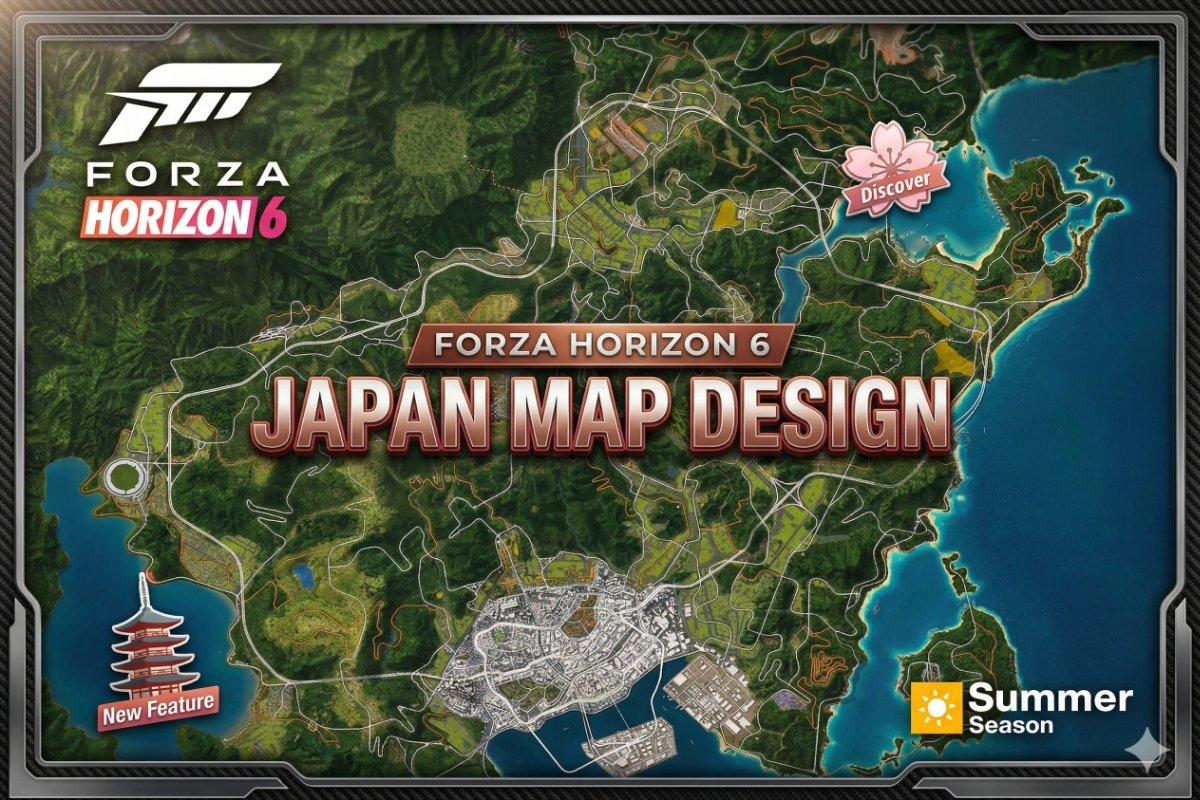
➞ The setting alone would have been enough to generate hype. But what surprised me is how thoughtfully designed the map actually is.
This isn’t just “Japan as a backdrop.” It’s Japan built for driving.
The biggest difference I noticed is verticality.
Instead of long, flat highways like we’ve seen before, the map constantly shifts:
- From tight Tokyo streets
- To winding mountain passes
- To steep elevation climbs in the Japanese Alps,
That changes how I drive completely.
On mountain roads, I can’t just rely on speed. I have to manage braking, angles, and momentum—especially on downhill runs where things get chaotic fast.
And then there’s the atmosphere.
The preview was locked to Spring, and the cherry blossoms weren’t just visual filler. Petals react to movement, roads reflect light realistically, and the entire environment feels alive.
What really stood out to me is how well this map supports different playstyles:
- Drifting on touge roads
- High-speed racing in Tokyo
- Exploration in off-road areas
This is easily the most functionally diverse map Horizon has ever had.
Graphics and Performance: What Actually Matters in Real Gameplay
➞ Let’s be real—graphics talk can get boring fast. But here, it actually matters.
From what I’ve seen, Forza Horizon 6 is pushing visual realism further than any previous entry.
The game offers two modes:
Quality Mode
- Native 4K resolution
- Ray-traced reflections in the open world
- Better lighting and particle effects
Performance Mode (confirmed)
- Targets 60 FPS
- Uses dynamic resolution scaling
Now here’s the part that impressed me—the preview build was locked at 30FPS, but it didn’t feel slow.
The motion blur and frame pacing are so well handled that high-speed driving still feels smooth and responsive.
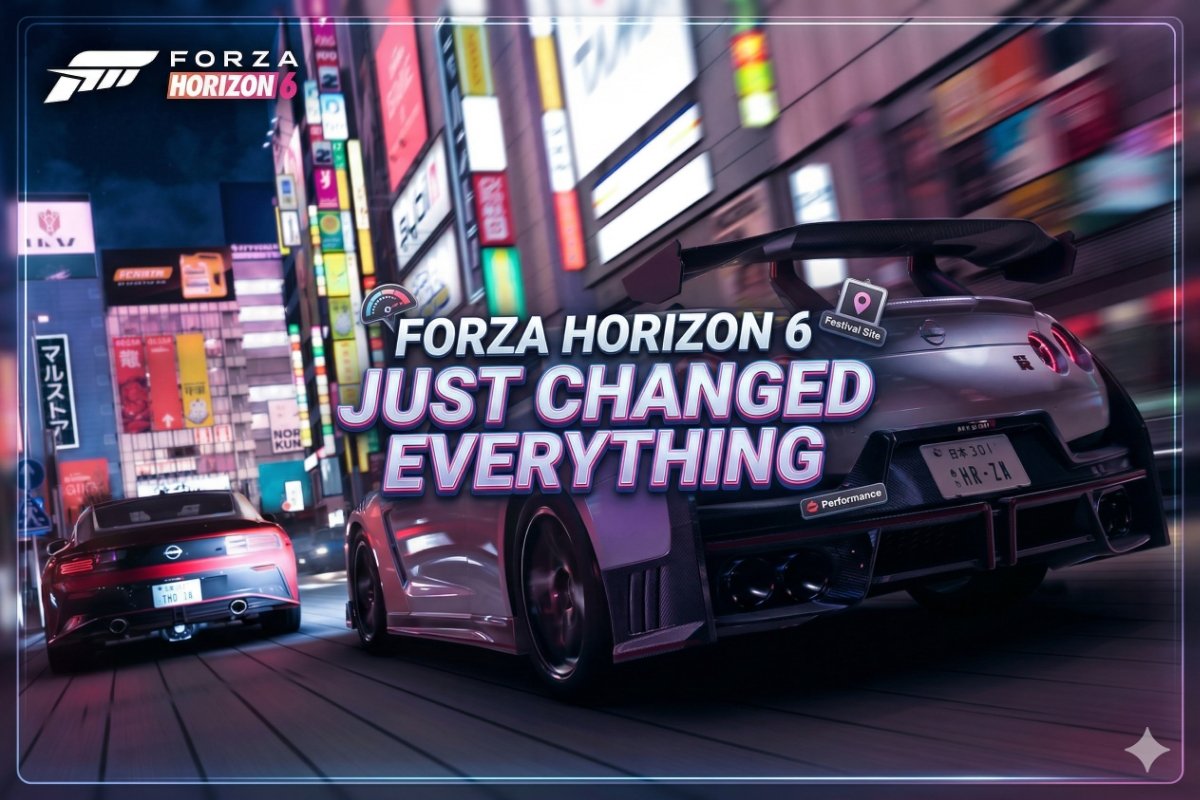
Driving through Tokyo at night, especially in wet conditions, feels almost cinematic. Reflections from neon lights behave exactly how you’d expect in real life.
For me, this isn’t just about visuals—it’s about immersion. And Horizon 6 clearly prioritizes that.
Used Car System: A Small Feature That Changes Everything
➞ This is the feature I didn’t expect, but it might be one of the most important additions.
Forza Horizon 6 introduces a used car / aftermarket system, and it changes how progression works in a big way.
Instead of always buying brand-new cars and upgrading them myself, I can now find vehicles that already have modifications.
And these aren’t random.
Each car feels like it has a history:
- Some are tuned for speed
- Some for handling
- Some are just poorly built
That unpredictability is what makes it interesting.
I might find a cheaper car that performs better than a fully upgraded stock vehicle—if the build is right.
This adds strategy to something that used to be pretty straightforward.
It also makes the game feel more connected to real-world car culture, where people buy and sell modified cars all the time.
For me, this system adds depth without complexity, which is exactly what Horizon needed.
ANNA 2.0: More Than Just Navigation
➞ ANNA has always been there, but in previous games, I barely paid attention to it.
That changes here.
In Forza Horizon 6, ANNA feels like a proper system, not just a voice assistant.
The most noticeable addition is Auto Drive.
I can literally let the car drive itself to a destination. At first, it sounds like a gimmick—but it’s actually useful when I just want to explore or take in the environment.
There’s also a stronger integration with the festival itself.
ANNA helps manage navigation, events, and general flow in a way that feels more natural.
Then there’s Drone Mode and World Builder, which hints at something bigger.
It looks like the game is moving toward giving players more control over how the world is experienced—not just how we race in it.
That shift matters.
It turns Horizon into more of a platform, not just a racing game.
Customization Feels More Real—and More Punishing
➞ Customization has always been a big part of Horizon, but this time it feels more meaningful.
The biggest change is that not every upgrade is automatically better.
That might sound obvious, but in previous games, it was easy to just stack upgrades and improve performance.
Now, I actually have to think.
For example:
- Engine swaps can increase power but hurt balance
- Converting FWD to AWD can improve traction but affect handling
That means builds require actual decision-making.
I can’t just max everything out and expect the car to perform well.
On the visual side, customization is deeper too.
There are more wheel options, better fitment control, and improved aero designs that actually look like they belong on the car.
For someone like me who enjoys tuning, this is a huge upgrade.
➣ What Every Gamer Is Reading Right Now
Wuthering Waves Redeem Codes – Free Hidden Rewards
Pokemon Champions – The Smart Way to Progress Faster
Event Types and Gameplay: More Competitive, Less Casual
➞ The event structure also feels more refined.
There are three main types that stood out to me:
Technical Circuit Races
These focus heavily on precision. Braking points matter more, and the AI feels more aggressive than before.
Winning actually feels earned.
Cross-Country Events
These highlight the physics system. Water, jumps, and terrain all play a bigger role.
It’s less predictable—and more fun.
Time Attack Mode
This is probably the most addictive addition.
Short events, leaderboard focus, and real-time ghost data make it easy to keep replaying and improving.
For me, this adds a competitive layer that Horizon sometimes lacked.
The Prologue: A Strong First Impression
➞ The game opens with a race against a bullet train, and yeah—it’s as good as it sounds.
You start in a Nissan GT-R R35 Nismo, and the sequence takes you through multiple parts of the map.
It’s fast, cinematic, and well-paced.
But more importantly, it introduces the world in a way that feels natural—not forced.
By the time it ends, I already have a clear sense of what the game is trying to be.
Final Verdict: Is Forza Horizon 6 Actually Worth It?
➞ After going through everything, here’s my honest take.
Forza Horizon 6 isn’t trying to reinvent the formula completely.
But it is refining it in ways that actually matter:
- Smarter systems
- More meaningful progression
- Better map design
- Deeper customization
And most importantly – it respects the player more.
It doesn’t just hand everything to you. It gives you tools and lets you figure things out.
That’s what makes it engaging.
If you’re someone who enjoys:
- Real driving experiences
- Car tuning and builds
- Competitive racing
Then yeah—this is shaping up to be one of the best Horizon games yet.
And personally, I’m already thinking about my first build before the game even launches.

I’m Parth Patel, also known as iGPSYCHO, the founder of Immortal Gamers and a dedicated gaming content creator with a deep interest in gaming culture, strategy analysis, and eSports.