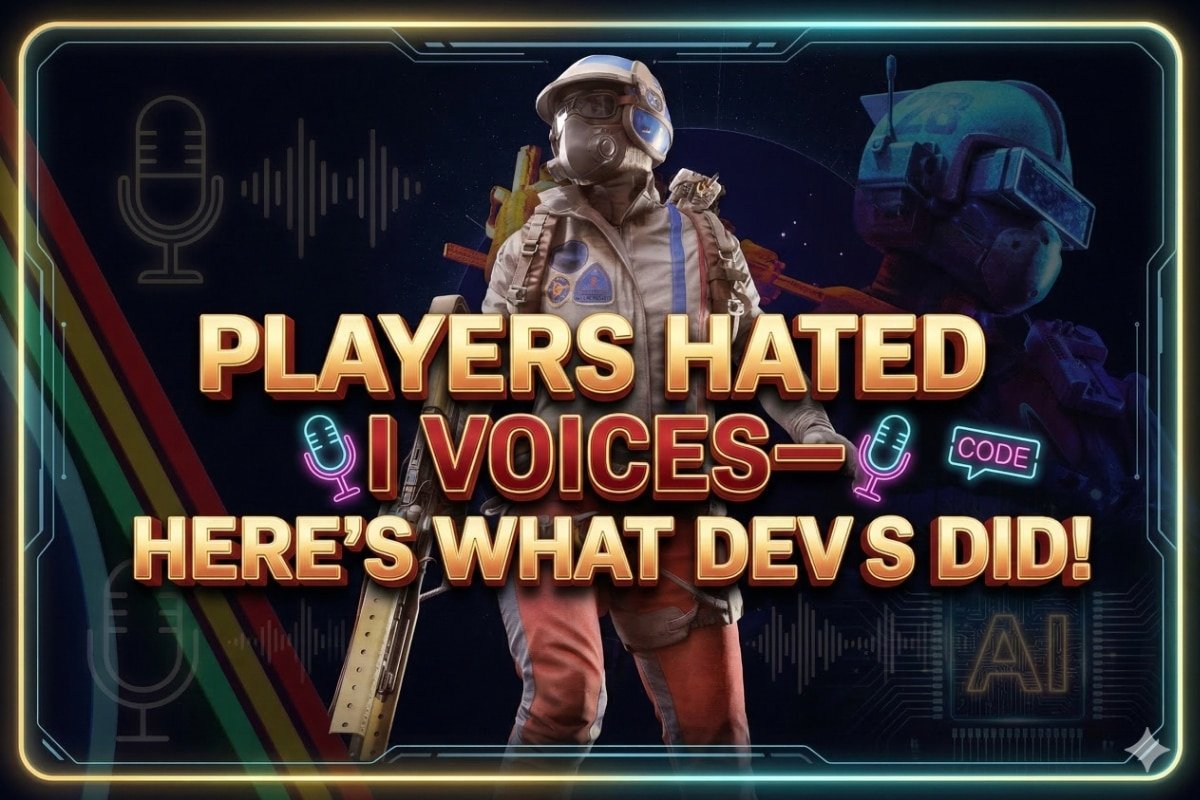
Players Hated Arc Raiders’ AI Voices—Here’s What the Developers Did Next
➞ When I started playing Arc Raiders at launch, I was hooked almost instantly. The gameplay felt fresh, the world design was impressive, and the overall experience lived up to the hype. But there was one thing I couldn’t ignore—and neither could the community: Arc Raiders’ AI voices.
At first, I thought it was a minor issue. But after a few matches, especially while using the ping system, the AI-generated dialogue started to feel unnatural. It lacked emotion and timing, and over time, it became distracting. Clearly, I wasn’t the only one who felt this way.
Why Players Had a Problem With AI Voices
➞ The issue wasn’t just about AI being used—it was about how it affected immersion.
Most of the AI-generated lines were tied to in-game pings and non-essential dialogue. Still, these lines are something players hear constantly during matches. When they sound robotic or repetitive, it breaks the flow of gameplay.
What added fuel to the fire was the way these voices were created. Embark Studios used text-to-speech models trained on licensed voice data from real actors. While those actors were paid, many players—including me—felt that something was missing: authenticity.
In a game that otherwise feels polished, this approach stood out more than it should have.
The backlash was immediate.
➞ Not long after launch, discussions about Arc Raiders’ AI voices started trending across forums and social platforms. Some players called it immersion-breaking, while others raised bigger concerns about AI replacing real voice actors in games.
From my perspective, this wasn’t just nitpicking. It was a valid concern. Voice acting plays a huge role in how a game feels, even in smaller systems like pings.
And when a game is doing almost everything right, even a small flaw becomes more noticeable.
How the Developers Responded
➞ To their credit, Embark didn’t ignore the criticism.
In a post-launch update, CEO Patrick Söderlund confirmed that the team had re-recorded several AI-generated lines using real voice actors. According to him, there are now fewer AI voice lines in the game compared to launch.
After spending more time with the updated version, I can say the difference is noticeable. The new lines feel more natural and fit better within the game’s flow.
Söderlund also openly admitted something many players were already thinking:
A real professional voice actor simply delivers better quality than AI.
That level of honesty is something I respect.
➣ What Every Gamer Is Reading Right Now
Death Stranding 2 Open World Guide & More
Blue Protocol Star Resonance Tier List – 2026 Guide
AI Is Still Part of the Process
➞ Even with these changes, AI hasn’t been completely removed—and that’s important to understand.
Embark still uses AI as a development tool. It helps them test dialogue quickly and experiment with different variations before final recordings. For a live-service game that gets regular updates, this approach makes sense.
From what I’ve seen, AI is now being used more carefully—mainly for less important lines that don’t impact immersion as much.
And honestly, that feels like a reasonable balance.
What This Means for Players
➞ For me, this situation shows that developers are paying attention.
Arc Raiders is already a successful game, but instead of ignoring feedback, the team chose to improve something that players genuinely cared about. That’s not always common in the industry.
At the same time, this also highlights a bigger trend. AI is becoming a part of game development, but it still can’t fully replace human creativity- especially in areas like voice acting.
Conclusion
➞ After revisiting the game, I can confidently say that Arc Raiders feels better now than it did at launch, even if the changes seem small on paper.
The AI voice controversy was real, and the criticism made sense. But what matters more is how the developers responded. By bringing in real voice actors and reducing AI usage, they’ve improved the overall experience without completely abandoning new technology.
From where I stand, that’s the right direction.
Because no matter how advanced AI gets, when it comes to delivering emotion and immersion, human performance still makes the difference.