
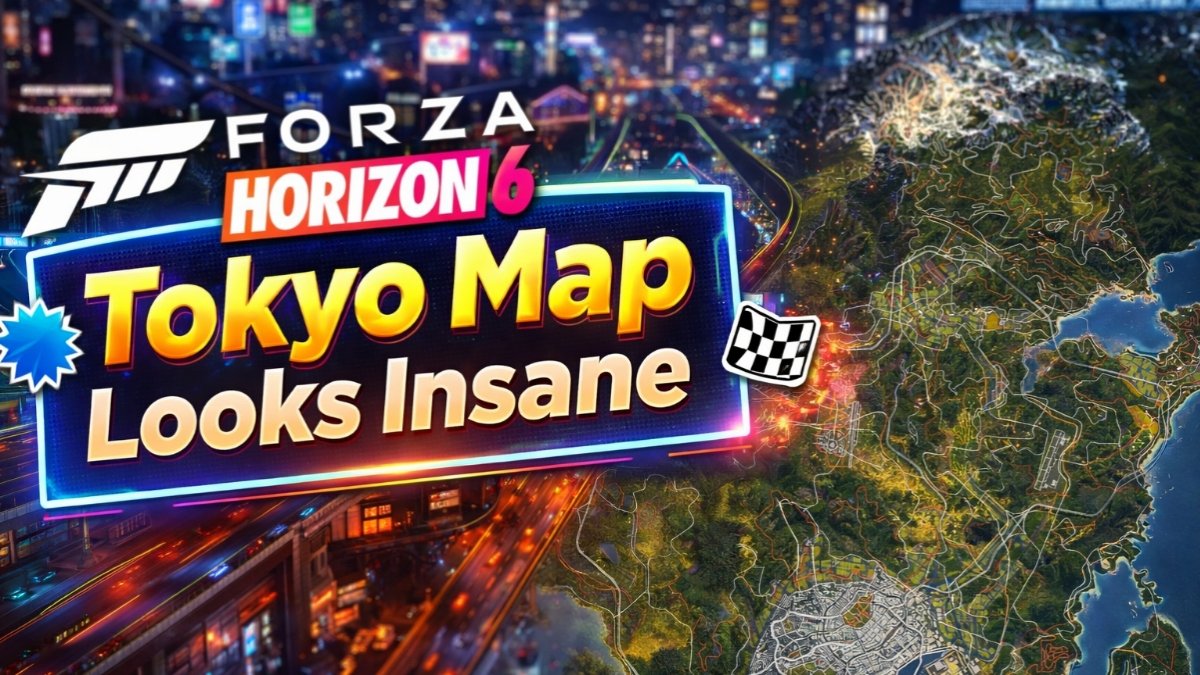
Forza Horizon 6 Tokyo Map Breakdown: A Deep Dive Into the Most Realistic Racing World Yet
➞ When I first started digging into Forza Horizon 6 Tokyo Map, I didn’t expect it to feel this different. I’ve played every Horizon title extensively, and usually, the map is just a backdrop for racing. But this time, it feels like the map itself is the main character.
The Forza Horizon 6 Japan map isn’t just bigger or prettier—it’s smarter, denser, and far more intentional in how it’s built. From vertical highways to culturally accurate car hubs, everything feels designed with purpose.
In this breakdown, I’m going beyond surface-level features. I’ll explain how the Tokyo map actually plays, what makes it unique, and why it might completely change how we experience open-world racing.
Tokyo Map Design Philosophy: Why Verticality Changes Everything
➞ The biggest shift I noticed immediately is how the map uses vertical space.
In previous Horizon games, I was mostly driving across wide landscapes. Here, I’m constantly choosing between layers—street level or elevated roads. That alone changes how I approach driving.
At ground level, the roads are tighter, more chaotic, and filled with traffic. It demands focus. But once I hit the expressways, everything opens up. Speed becomes the priority, but so does precision.
What I find interesting is how natural this feels. It’s clearly inspired by Tokyo’s real-world structure, but it doesn’t feel forced. Instead, it adds a new layer of decision-making:
- Do I take the faster route above?
- Or stay below for tighter, more technical driving?
That constant choice keeps the gameplay fresh. It’s not just about where I’m going—it’s about how I choose to get there.
Breaking Down Tokyo’s Districts: Each Area Feels Like a Different Game
➞ One thing I appreciate is that the map isn’t repetitive. Each district genuinely changes how I drive.
Downtown Tokyo: Fast Decisions, Tight Margins
➞ Downtown is intense. Neon lights everywhere, narrow streets, and constant traffic.
When I imagine racing here, I know I won’t be able to rely on pure speed. It’s all about control. Missing a turn or misjudging a gap could cost the entire race.
This area feels perfect for:
- Technical street races
- Night driving
- Close-quarters competition
The Suburbs: Slower, But More Demanding
➞ The suburbs surprised me the most. At first glance, it looks calm—but driving here requires discipline. The roads are narrower, and there’s less room for error.
I see this area as:
- A skill-testing zone
- A place where clean driving matters more than aggression
It also adds variety. After intense city driving, this area feels like a reset.
Industrial Area: Where Car Culture Comes Alive
➞ This is easily one of my favorite parts of the map. It’s not just about racing—it’s about identity. The industrial zone feels raw and authentic, especially with the inclusion of Daikoku.
This is where I’d go to:
- Test builds
- Meet other players
- Experience the JDM atmosphere
It feels less like a race zone and more like a community hub.
Dockyard: Pure Freedom and Chaos
➞ The Dockyard feels like a sandbox.
It’s open, unpredictable, and clearly built for experimentation. Whenever I want to push limits—whether it’s drifting or stunt driving—this is where I’d go.
It breaks the structure of traditional racing and lets me just enjoy the physics of the game.
Expressway System: High-Speed Driving That Actually Feels Risky
➞ The expressways are, without a doubt, one of the most exciting additions. I’ve driven fast in Horizon before – but this feels different.
Here, speed isn’t just about acceleration. It’s about:
- Timing
- Awareness
- Precision
Weaving through traffic at high speeds forces me to stay fully engaged. One mistake isn’t just a slowdown—it’s a crash.
What I really like is how this system creates tension. Even in free roam, there’s a sense of risk. It makes high-speed driving feel earned, not effortless.
JDM Culture and Daikoku: More Than Just a Feature
➞ I’ve always felt Horizon games touched on car culture—but never fully embraced it.
This time, it feels different.
Daikoku Parking Area isn’t just another location. It feels like a tribute to real car culture.
When I think about spending time there, it’s not about racing. It’s about:
- Showing builds
- Discovering new cars
- Connecting with other players
The rotating aftermarket system adds another layer. It gives me a reason to keep coming back, checking what’s new, and experimenting with different setups.
For the first time, Horizon feels like it understands why people love cars—not just how they drive.
Hidden Details That Make the World Feel Alive
➞ What impressed me most wasn’t just the big features—it was the small ones.
Alleyways and Hidden Routes
These aren’t just shortcuts. They reward curiosity. I can already tell that players who explore will have an advantage.
Traffic Density
This changes everything.
Driving through busy streets forces me to adapt constantly. It makes races less predictable and more dynamic.
Pedestrian Presence
Even though interaction is limited, their presence matters. It adds realism and makes the world feel active.
These details might seem minor individually, but together, they create immersion. And that’s what makes the map feel alive.
➣ What Every Gamer Is Reading Right Now
Is the Mazda Miata Forza Edition the Best Car in FH6?
Forza Horizon 6 Sets a New Standard for Racing Games..
Visual Technology: The Real Next-Gen Leap
➞ I’ve seen good graphics before—but this feels like a step forward.
The way light interacts with the environment is what stands out the most.
Rain changes everything. Reflections, visibility, and even mood shift instantly.
At night, the neon lights don’t just look good—they transform the entire experience. Driving through wet streets with reflections bouncing off the road feels incredibly realistic.
Even small touches, like environmental particles reacting to movement, add depth. It’s not just visual fidelity—it’s atmosphere.
Why This Might Be the Most Ambitious Horizon Map Ever
➞ After analyzing everything, I genuinely believe this map represents a major shift for the series.
It’s not just about scale anymore. It’s about:
- Density
- Realism
- Player choice
Every system—from vertical roads to cultural hubs—feels connected.
Instead of just giving me a playground, the game gives me a world that reacts to how I play.
That’s a huge difference.
My Personal Take: Is Forza Horizon 6 Setting a New Standard?
➞ From my perspective, this is the most exciting direction the franchise has taken in years. What stands out to me isn’t just the features—it’s the intent behind them.
Everything feels designed to:
- Keep players engaged longer
- Encourage exploration
- Build a deeper connection with the game.
If all of this is executed well, I truly believe Forza Horizon 6 Tokyo could set a new standard—not just for Horizon, but for racing games as a whole.
And honestly, I’m not just looking forward to racing here.
I’m looking forward to experiencing it.

I’m Parth Patel, also known as iGPSYCHO, the founder of Immortal Gamers and a dedicated gaming content creator with a deep interest in gaming culture, strategy analysis, and eSports.